Messiah

Names of God

“Andrew went to find his brother, Simon, and told him, “We have found the Messiah” (which means ‘Christ’).” (John 1:41 NLT)

God has many names and titles in the Bible. Each one tells us something important about Him—His character and how He relates to us. And how we must relate to Him. Here is another one of His many Names, which is Messiah.

Messiah

Messiah: from Hebrew mashiaḥ, “anointed”— in Judaism, the expected king of the Davidic line who would deliver Israel from foreign bondage and restore the glories of its golden age. The Greek New Testament’s translation of the term, christos, became the accepted Christian designation and title of Jesus of Nazareth, indicative of the principal character and function of His ministry.  

Jesus of Nazareth was and is the prophesied Messiah

“The woman said to him, “I know that Messiah is coming (he who is called Christ). When he comes, he will tell us all things.” Jesus said to her, “I who speak to you am he.” (John 4:25–26 ESV) C

Throughout the New Testament, we see proof that Jesus is the Chosen One 

“These [miracles] are written that you may believe that Jesus is the Messiah, the Son of God, and that by believing you may have life in his name” (John 20:31).

“Simon Peter answered, “You are the Messiah, the Son of the living God.” (Matt. 16:16 NIV) 

The ultimate proof that Jesus is Messiah is His resurrection from the dead

“And we are witnesses of all that he did both in the country of the Jews and in Jerusalem. They put him to death by hanging him on a tree, but God raised him on the third day and made him to appear, not to all the people but to us who had been chosen by God as witnesses, who ate and drank with him after he rose from the dead. And he commanded us to preach to the people and to testify that he is the one appointed by God to be judge of the living and the dead. To him all the prophets bear witness that everyone who believes in him receives forgiveness of sins through his name.” (Acts 10:39-43 ESV)

Mediator

Names of God

“But now He has obtained a more excellent ministry, by as much as He is also the mediator of a better covenant, which has been enacted on better promises.” (Heb. 8:6)

God has many names and titles in the Bible. Each one tells us something important about Him—His character and how He relates to us. And how we must relate to Him. Here is another one of His many Names, which is Mediator.

Mediator

 ·      Dictionary definition“one who mediates” or more specifically, “one that mediates between parties at variance.”

The word carries the idea of someone who is a go-between for two arguing parties, usually through some sort of compromise.

·      Bible definition: The biblical word does not involve compromise but instead holds a deeper and richer meaning. In the Bible, Christ as Mediator reconciled man and God and is the only One who can mediate to bring about a relationship between God and man. 

“Jesus answered, “I am the way and the truth and the life. No one comes to the Father except through me.” (John 14:6 NIV)

Therefore

Jesus’ role as mediator is linked to His sacrificial death on the cross. He is the only One who could bring reconciliation between man and God.

“For, There is one God and one Mediator who can reconcile God and humanity—the man Christ Jesus.” (1 Tim. 2:5)

“and to Jesus, the mediator of a new covenant, and to the sprinkled blood, which speaks better than the blood of Abel.” (Heb. 12:24)

Lord of lords

Names of God

“They will wage war against the Lamb, but the Lamb will triumph over them because he is Lord of lords and King of kings—and with him will be his called, chosen and faithful followers.” (Rev. 17:14)

God has many names and titles in the Bible. Each one tells us something important about Him—His character and how He relates to us. And how we must relate to Him. Here is another one of His many Names, which is Lord of lords.

Lord of lords

The phrase lord of lords is used by itself in Scripture twice and refers to God the Father.

“For the Lord your God is God of gods and Lord of lords, the great God, mighty and awesome, who shows no partiality and accepts no bribes.” (Deut. 10:17 NIV)

Give thanks to the Lord of lords: His love endures forever.” (Psalm 136:3 NIV). 

God’s preeminence over other rulers

Isaiah 40:23–24 says that the Lord brings “princes to nothing” and makes earth’s rulers “emptiness.” The mere breath of the Lord will “carry them off like stubble.” Daniel’s vision of the son of man in Daniel 7:13–14 is of one whom he calls “the Ancient of Days” whose everlasting dominion is over all people, nations and languages. In the New Testament, we get a better view of the One these passages refer to.

Jesus – Lord of lords 

“He is the radiance of the glory of God and the exact imprint of His nature, and He upholds the universe by the word of His power” (Heb. 1:3).

“On his robe and on his thigh he has this name written: king of kings and lord of lords.” (Rev. 19:16) 

“They will wage war against the Lamb, but the Lamb will triumph over them because he is Lord of lords and King of kings—and with him will be his called, chosen and faithful followers.” (Rev. 17:14 NIV)

In the end, all other rulers will be conquered or abolished, and He alone will reign supreme as King and Lord of all the earth.

Therefore

There is no higher authority. Jesus reign over all things is absolute and inviolable. God raised Him from the dead and placed Him over all things.

“far above all rule and authority and power and dominion, and above every name that is named, not only in this age but also in the one to come. And he put all things under his feet and gave him as head over all things to the church, which is his body, the fullness of him who fills all in all” (Eph. 1:21-23).

Lord of all

Names of God

“You know the message God sent to the people of Israel, announcing the good news of peace through Jesus Christ, who is Lord of all.” (Acts 10:36)

God has many names and titles in the Bible. Each one tells us something important about Him—His character and how He relates to us. And how we must relate to Him. Here is another one of His many Names, which is Lord of all.

Lord of all – Jesus

The name “Lord of all” (or “Lord over all”) occurs in two verses in the New Testament. The context of both verses shows that Jesus is Lord of Jews and Gentiles (non-Jews). In the more general sense He is Lord of all human beings.

“For there is no difference between Jew and Gentile—the same Lord is Lord of all and richly blesses all who call on him. (Rom. 10:12 NIV)

Therefore

“Theirs are the patriarchs, and from them is traced the human ancestry of the Messiah, who is God over all, forever praised! Amen.” (Rom. 9:5 NIV)

Lion of Judah

Names of God

“Then one of the elders said to me, ‘Do not weep! See, the Lion of the tribe of Judah, the Root of David, has triumphed. He is able to open the scroll and its seven seals.’” (Rev. 5:5 NIV)

God has many names and titles in the Bible. Each one tells us something important about Him—His character and how He relates to us. And how we must relate to Him. Here is another one of His many Names, which is Lion of Judah.

Jesus is the Lion of Judah

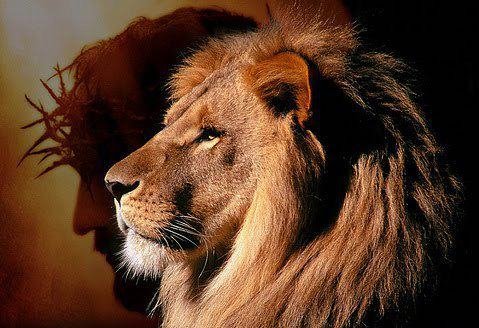
The Lion of the tribe of Judah is a symbol found in Genesis and Revelation. In Genesis, Jacob blesses his son Judah, referring to him and his future tribe as a lion’s cub and a lion (Gen. 49:9). In Revelation, this symbol is seen again when the Lion of the tribe of Judah is declared to have triumphed and is worthy to open the scroll and its seven seals (Rev. 5:5). Jesus is the One who is worthy to open the scroll (see John 5:22). Therefore, Jesus is the Lion of the tribe of Judah.

Therefore

Jesus will destroy all his enemies, even Satan who knows he is on borrowed time because his defeat is imminent. The greatest enemy we face as humans is the reality of sin and death. Our sin interrupted our relationship with God and our death meant eternal separation and punishment for our sin. Jesus conquered both of these enemies on our behalf. Our lion has given us victory over sin and has removed the penalty of death and replaced it with the promise and hope of eternal life. You can celebrate, because you are victorious today. You are no longer under the penalty of sin.

Light of the World

Names of God

“When Jesus spoke again to the people, he said, “I am the light of the world. Whoever follows me will never walk in darkness, but will have the light of life.” (John 8:12 NIV)

God has many names and titles in the Bible. Each one tells us something important about Him—His character and how He relates to us. And how we must relate to Him. Here is another one of His many Names, which is Light of the World.

Light of the world – Jesus

The Greek word for light in John 8:12 is phos, defined as the light; anything emitting light; light, i.e. brightness. God profoundly states, “I am.” Light is part of who Jesus is.

Therefore

Everything the light touches, Jesus is a part of.

“While I am in the world, I am the light of the world.”  (John 9:5)

Christ is the Light of the world. God is light, and Christ is the image of the invisible God. One sun enlightens the whole world; so does one Christ, and there needs no more. - Matthew Henry Commentary, Concise.

Lamb of God

Names of God

“The next day John saw Jesus coming toward him and said, “Look, the Lamb of God, who takes away the sin of the world!” (John 1:29 NIV)

God has many names and titles in the Bible. Each one tells us something important about Him—His character and how He relates to us. And how we must relate to Him. Here is another one of His many Names, which is Lamb of God.

Jesus - The Lamb of God

Isaiah 53 is an Old Testament chapter that depicts the first coming of Christ and His death. It talks about a lamb about to be sacrificed according to Jewish law.

“He was oppressed and He was afflicted, yet He opened not His mouth; He was led as a lamb to the slaughter, and as a sheep before its shearers is silent, so He opened not His mouth.” (Isa. 53:7 NKJV)

The New Testament also affirms this passage referring to Jesus Christ in the story of Philip and the Ethiopian eunuch. He asks Philip to explain the passage to him and then later gets baptized.

“Now the passage of the Scripture that he was reading was this: “Like a sheep he was led to the slaughter and like a lamb before its shearer is silent, so he opens not his mouth.” (Acts 8:32 ESV)

Therefore

Jesus Christ, the only Son of God, became the perfect sacrifice to die in your place on the cross. Jesus was perfect, spotless, and without blemish in the sight of God and thus was able to take away the sins of the world. Because sin requires a perfect sacrifice, and Jesus was without sin.

“Cleanse out the old leaven that you may be a new lump, as you really are unleavened. For Christ, our Passover lamb, has been sacrificed.” (1 Cor. 5:7)

King of kings

Names of God

“They will wage war against the Lamb, but the Lamb will triumph over them because he is Lord of lords and King of kings—and with him will be his called, chosen and faithful followers.” (Rev. 17-14)

God has many names and titles in the Bible. Each one tells us something important about Him—His character and how He relates to us. And how we must relate to Him. Here is another one of His many Names, which is King of kings.

The phrase King of kings is used in Scripture six times

Once, the title is applied to God the Father (1 Tim. 6:15), and twice to the Lord Jesus (Rev. 17:14; 19:16). The other three (Ezra 7:12; Eze. 26:7; Dan. 2:37) refer to either Artaxerxes or Nebuchadnezzar, kings who used the phrase to express their absolute sovereignty over their respective realms (Persia and Babylon).

Jesus alone reigns supreme

When Jesus is called “King of kings and Lord of lords,” it means that, in the end, all other rulers will be conquered or abolished, and He alone will reign supreme as King and Lord of all the earth. There is no power, no king, and no lord who can oppose Him and win.

“He brings princes to naught. and reduces the rulers of this world to nothing. No sooner are they planted, no sooner are they sown, no sooner do they take root in the ground, than he blows on them and they wither, and a whirlwind sweeps them away like chaff.” (Isa. 40:23–24)

“In my vision at night I looked, and there before me was one like a son of man, coming with the clouds of heaven. He approached the Ancient of Days and was led into his presence. He was given authority, glory and sovereign power; all nations and peoples of every language worshiped him. His dominion is an everlasting dominion that will not pass away, and his kingdom is one that will never be destroyed.” (Dan. 7:13–14)

The Lord Jesus

“He is the radiance of the glory of God and the exact imprint of His nature, and He upholds the universe by the word of His power” (Heb. 1:3).

His rule over creation is absolute

“which the blessed and only Sovereign One—the King of kings and Lord of lords—will bring about in His own time.” (1 Tim. 6:15)

“and from Jesus Christ, the faithful witness, the firstborn from the dead, and the ruler of the kings of the earth. To Him who loves us and has released us from our sins by His blood,” (Rev. 1:5)

Judge

Names of God

“And he ordered us to preach everywhere and to testify that Jesus is the one appointed by God to be the judge of all—the living and the dead.” (Acts 20:42 NLT)

God has many names and titles in the Bible. Each one tells us something important about Him—His character and how He relates to us. And how we must relate to Him. Here is another one of His many Names, which is Judge.

Judge 

·      Greek: to judge: Κριτὴς (Kritēs) -Strong’s Concordance 2923: A judge, magistrate, ruler.

·      Webster’s Dictionary: judge: [noun] one who makes judgments: such as. a public official authorized to decide questions brought before a court. one appointed to decide in a contest or competition : umpire. one who gives an authoritative opinion. critic. a tribal hero exercising leadership among the Hebrews after the death of Joshua.

·      Synonyms- evaluate, pass judgment, estimate, gauge, approximate, guess, pronounce, label, adjudicate, try, adjudge, calculate, cerebrate, cipher, cogitate, compute, cypher, decide, declare, determine, figure, hold, make up one's mind, reckon, resolve, settle, think, work out.

Jesus is the Judge

“Furthermore, the Father judges no one, but has assigned all judgment to the Son,” (John 5:22)

“And He has given Him authority to execute judgment, because He is the Son of Man.” (John 5:27)

It is true that Jesus came into the world to save those who put their trust in Him (John 3:16), but His coming also brought judgment (John 9:39). Through His death and resurrection, Jesus brought judgment to Satan (John 12:31–33). Furthermore, unbelievers will ultimately be judged by the Lord Jesus.

Jesus will act as judge over believers

At the Judgment Seat of Christ, He will judge believers’ works after salvation to determine reward or loss of reward (1 Cor 4:5; 2 Cor. 5:10). This judgment has nothing to do with salvation, as believers’ eternal destiny is secure in Jesus (Eph. 1:13–14). Rather, believers will receive rewards according to how faithfully they served Christ (Luke 19:12–27; 1 Cor. 3:12–15).

Jesus will act as judge over unbelievers

Unbelievers will be judged by Christ at the Great White Throne Judgment (Rev. 20:11–15). Again, this judgment has nothing to do with their eternal destiny—at that point, unbelievers have already sealed their fate by rejecting Jesus.The Great White Throne Judgment determines the severity of unbelievers’ punishment based on what they did in life (Rev. 20:12). Notably, all of the people at this judgment are thrown into the lake of fire because their names were not found in the book of life, which means they rejected Christ’s free gift of salvation (Rev. 20:15).

Sheep and Goat Judgment 

Another judgment that Jesus will preside over is referred to as the

Sheep and Goat Judgement or the Judgment of the Nations (Matt. 25:31–46). Some interpreters equate this judgment with the Great White Throne Judgment, but there are many notable differences, a major one being that the judgment is based on how people treated Jesus’ “brothers,” that is, the people of Israel (Matt. 25:40). Considering its placement after Jesus’ second coming, the Sheep and Goat Judgment will most likely determine the earthly fate of those who are alive at the time of Christ’s return (Matt. 25:1–30). During this judgment, Jesus will separate the “sheep” from the “goats.” The sheep are believers who gave evidence to their faith by helping the Jewish people during the tribulation; the goats are unbelievers who portrayed their unbelief by failing to help Jews during the tribulation (Matt. 25:33–36, 41–43). Those who rejected Christ and took the side of the beast during the tribulation “will go away to eternal punishment, but the righteous to eternal life” (Matt. 25:46).

Therefore

“For He has set a day when He will judge the world with justice by the Man He has appointed. He has given proof of this to everyone by raising Him from the dead." (Acts 17:31)